One thing I’ve found during my workouts is that small changes in form can dramatically improve the quality of a session.
It’s easy to think of an exercise as simply moving a weight from point A to point B. But the path you take, the speed of the movement, and where you focus your attention all change how an exercise feels and which muscles are doing most of the work.
Three changes in particular have made a real difference for me: following a more natural bar path, slowing down the negative, and focusing on the muscle instead of the weight.
1. Follow a Natural Bar Path
Take the bench press.
Instead of pushing the bar perfectly straight up and down, I find it more useful to think about following a slight curve.
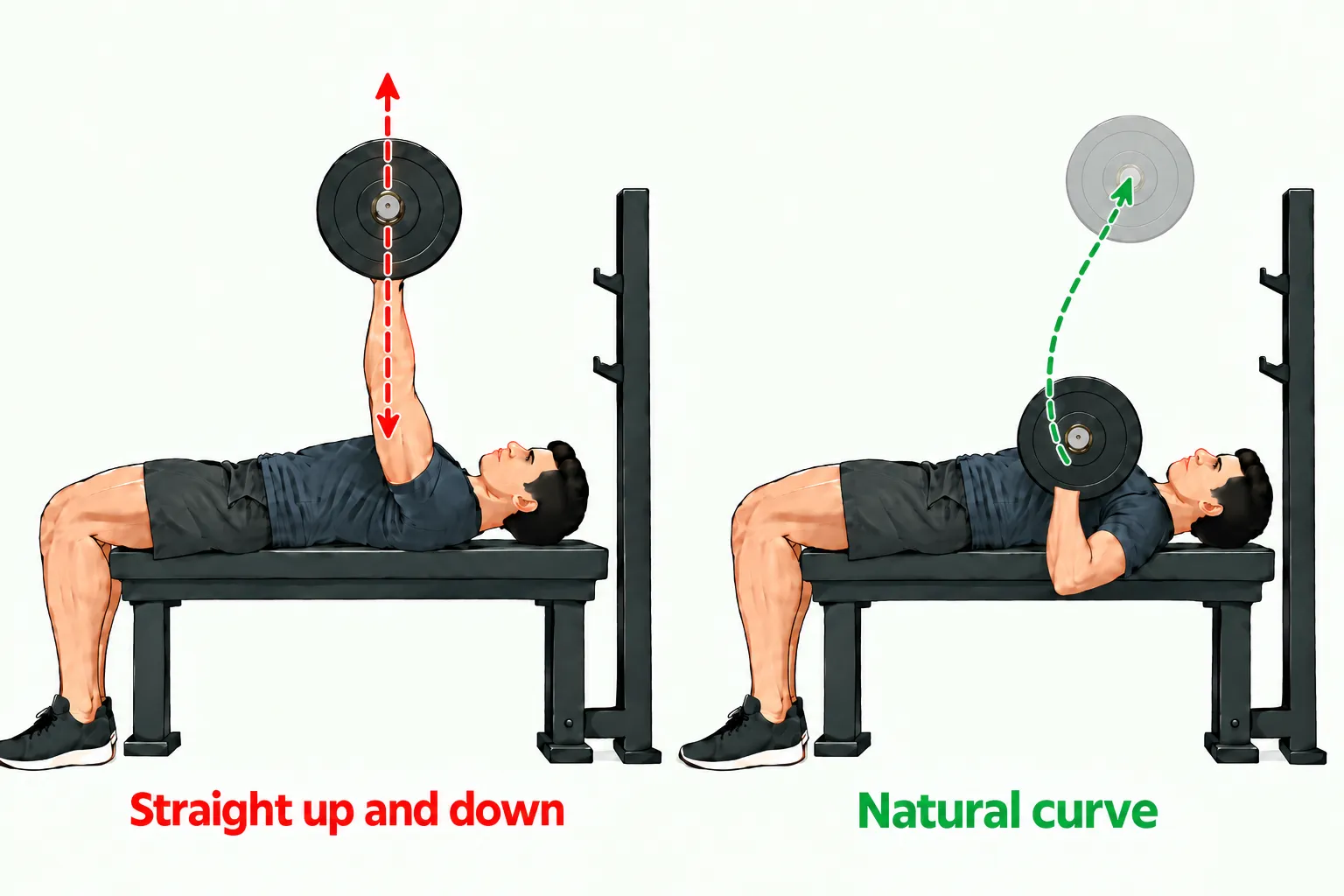
At the bottom, the bar touches around your lower chest. As you press, it travels up and slightly back, so that at the top it ends up directly over your shoulders. On the way down, follow the same controlled path back to your lower chest.
For most people this feels more natural than a perfectly vertical line, and it tends to be easier on the shoulders, because you aren’t forced to flare your elbows out to bring the bar down high on your chest.
The important part is not exaggerating the curve. It should feel controlled and natural, not like you’re forcing the weight into an unusual path.
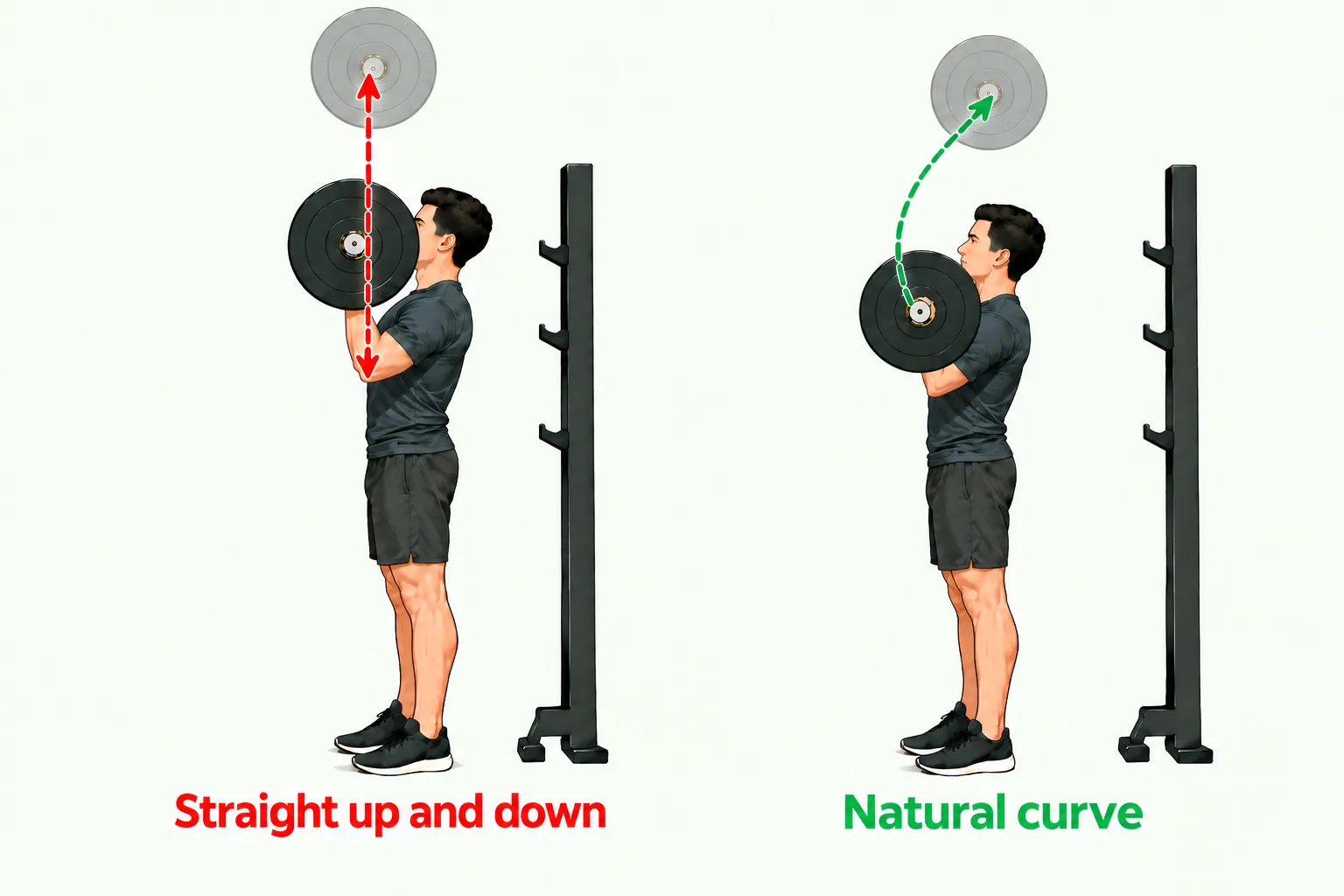
The same idea applies to the overhead press. The bar can’t go straight up because your face is in the way, so you tilt your head slightly back and let the bar travel up just in front of your chin, and once it passes your forehead, you move your head forward “through the window” so the bar finishes over the middle of your foot.
2. Slow Down the Negative
Another change that made a noticeable difference for me is slowing down the negative (lowering) part of each rep.
Instead of letting the weight drop back into position, control it.
On the bench press, for example, take around two to three seconds to lower the bar while keeping tension. Don’t just let gravity do the work.
This gives you more time under tension and makes it much harder to use momentum to finish the rep. You don’t need to go extremely slow, though. Lowering for six or eight seconds mostly just forces you to use a lighter weight.
3. Focus on the Muscle, Not the Weight
There’s also a mental component to this.
During that slow, controlled negative, I try to visualize the target muscle stretching under control.
Rather than thinking only about moving the weight, think about what the muscle is actually doing.
For example:
Don’t just think: “I’m lowering the bar.”
Think: “I’m controlling the stretch in my chest as the bar comes down.”
That small change in focus makes you much more aware of your technique and how the muscle is working. And it isn’t just a feeling: a 2018 study by Schoenfeld and colleagues found that lifters who focused on the working muscle grew their biceps more than those who focused only on moving the weight.
Better Reps, Not Just Heavier Ones
Better form isn’t about lifting more weight today. It’s about making the weight you already lift work better for you, and over time, that’s usually what lets you lift more anyway.
A natural bar path, a controlled negative, and real focus on the target muscle can turn an average set into a much more effective one. They’re small changes, but they can make a surprisingly big difference in how your whole workout feels.